

Hinge-Cutting for Deer in Indiana: Where It Helps and Where It Hurts
Hinge-cutting is one of the fastest ways to add cover and browse. It's also one of the easiest to overdo.
By Cade Paddock, Built to Hunt Land Co. Published .
Hinge-cutting means cutting partway through a young tree so it falls over but stays alive. It puts browse and cover at deer level right away, and it can steer deer movement. Done in the wrong place or overdone, it can block the very movement you wanted. Plan it on a map first.
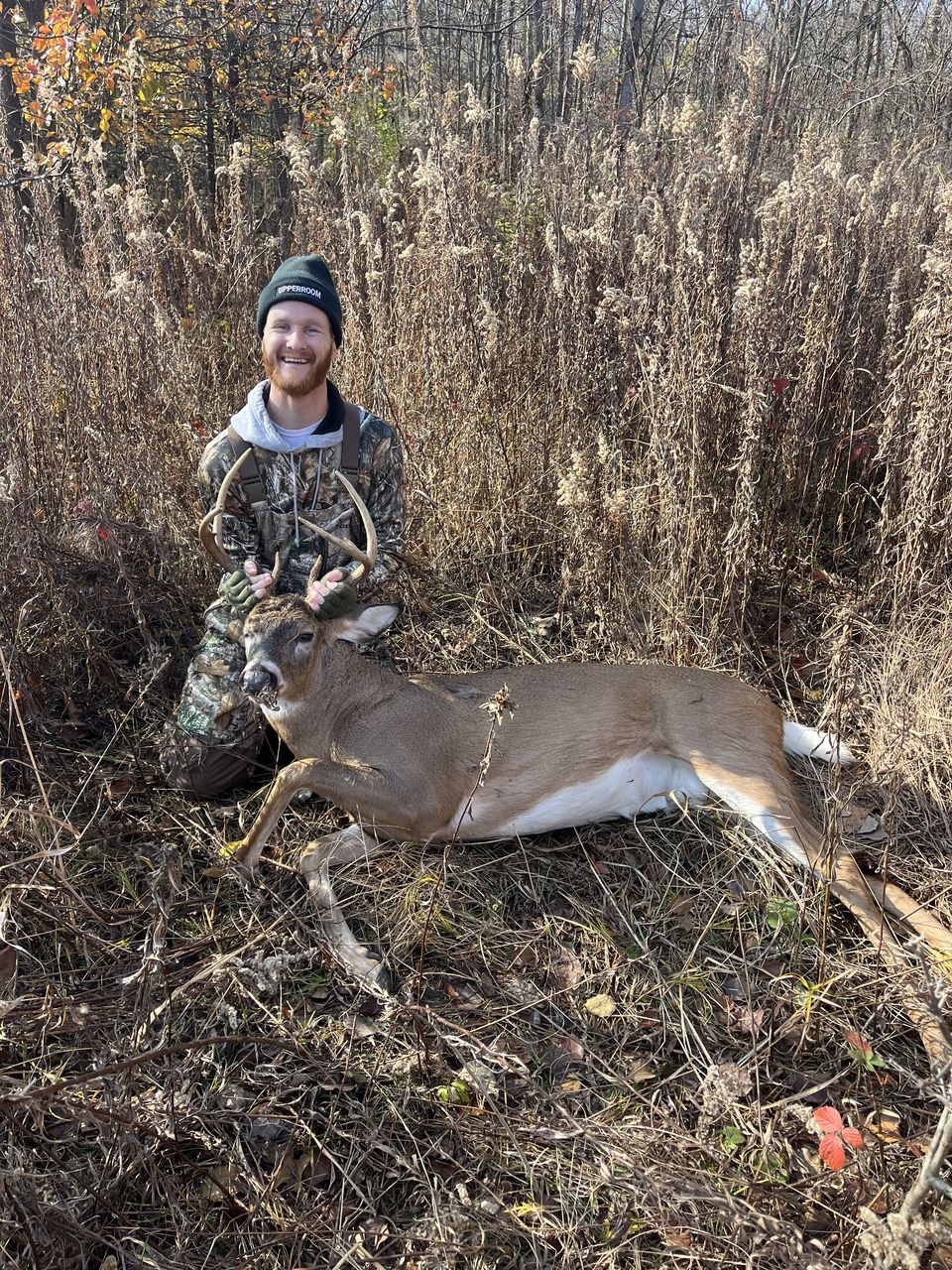
What does hinge-cutting do for deer?
A lot of Indiana timber is mature hardwood with a closed canopy and not much growing on the ground. Deer walk through it but have little reason to stay. A hinge-cut tree keeps growing on its side, so it puts leaves and buds where deer can reach them and makes cover where there was none. Around a food plot or a field edge it gives deer security as they feed. It’s one of the small changes I talk about on every property walk.
Where does it help most?
- Bedding cover in open timber, laid out so deer still have room to move and escape
- Field and plot edges, to give deer cover where they step out to feed
- Screening along your access route, so deer don’t see you walking in
- Gentle funnels that steer deer past a stand instead of around it
How does it go wrong?
The National Deer Association calls hinge-cutting one of the most overused and misunderstood habitat tools, in its piece on the right and wrong of hinge cutting. The common mistakes: cutting so much that deer can’t move through it, cutting oaks and other trees that feed wildlife, and cutting without a plan for how deer will use the area. A pile of tangled tops in the wrong spot can push deer off your property instead of holding them.
What are the safety rules?
Hinge-cutting is chainsaw work on trees under tension, and it’s easy to get hurt. The National Deer Association’s list of the three most dangerous hinge-cut mistakes is worth reading before you start. Its point on height is a good one: there is no habitat advantage to cutting higher than chest height, and a saw held at head height is where kickback injuries happen. Stick to small trees you can handle.
Should I do it myself or hire it out?
Either way, plan it first. On a walk I mark where hinge-cutting fits into the bigger picture of bedding, food and access, and which trees to leave. Then you can cut it yourself or have me do it as part of habitat work. If your woods are large, your DNR district forester can also help with the forestry side.
Want this done right on your ground? Every project starts with a free call.
Book a Free Call